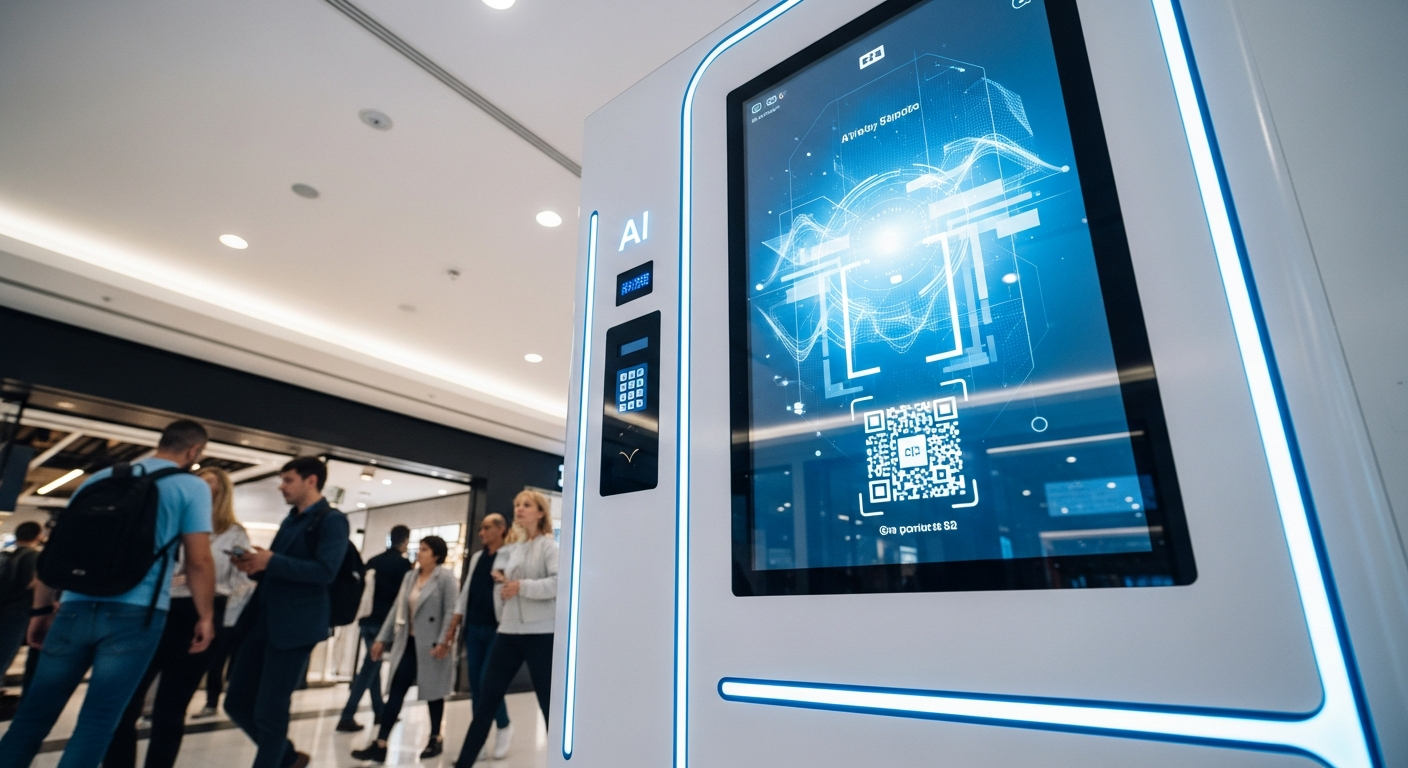
Smart vending machines offer remote inventory monitoring, cashless payments, and data-driven restocking—making them ideal for multi-location operators and high-traffic venues. Traditional machines remain a viable, lower-cost entry point for single-location operators and areas with strong cash demand, though they lack real-time visibility and require manual servicing.
The Core Difference: Connectivity and Control
The fundamental distinction between smart and traditional vending machines is connectivity. Smart machines—like those in the Kiosk X line—connect to cloud-based dashboards via cellular or Wi-Fi, giving operators live inventory counts, sales data, and payment analytics. Traditional machines operate standalone: you stock them, empty the cash box, and restock when they appear empty.
Per the National Vending Association, the US vending industry generates over $30 billion annually, and the shift toward cashless, connected units is accelerating. This trend reflects both consumer behavior and operator efficiency demands.
Key operational differences:
- Inventory visibility: Smart machines alert you to low stock in real time; traditional machines require manual checks.
- Payment methods: Smart machines accept cards, mobile wallets, and QR payments; traditional machines typically accept cash and coins only.
- Restocking efficiency: Smart data tells you *exactly* what to restock and when; traditional restocking is guesswork.
- Revenue capture: Cashless payment reduces lost sales from customers without coins or cash.
Upfront Costs: What You'll Spend
Cost is often the deciding factor for first-time operators. Traditional machines are cheaper to buy but may cost more to operate over time.
Traditional vending machine costs:
- Purchase price: $1,500–$4,000 per unit (snacks, beverages, or specialty items).
- No subscription or connectivity fees.
- Higher labor costs due to manual restocking and cash collection.
Smart vending machine costs:
- Purchase price: $3,500–$8,000+ per unit (depending on size and features).
- Monthly connectivity fee: $25–$75 per machine for cloud platform access and cellular service.
- Lower per-unit labor costs due to data-driven restocking.
- Optional: remote diagnostics, predictive maintenance, and advanced analytics ($10–$30/month).
For a single-location operator, a traditional machine may make sense. For a fleet of 5+ machines across multiple sites, smart machines typically deliver better ROI within 18–24 months due to reduced labor and shrinkage.
Cashless Payments and Consumer Behavior
The Federal Reserve and National Retail Federation both report that US consumers increasingly prefer cashless payments, with contactless and mobile wallets accounting for over 50% of retail transactions in 2024–2025. This shift directly impacts vending revenue.
Why cashless matters:
- Customers without cash will skip a traditional machine and use a competitor's smart unit.
- Reduced cash handling lowers theft and security costs.
- Payment data helps you understand purchasing patterns and optimize product mix.
- Smart machines can offer dynamic pricing, loyalty programs, and promotional discounts.
Traditional machines with coin/bill acceptors still work in transit hubs, parking garages, and offices where some cash demand persists—but they leave money on the table in urban areas, college campuses, and corporate offices where cards dominate.
Real-World Scenario: Single vs. Multi-Location
Scenario 1: First-time operator, one location (office break room)
You're a small business owner with one office break room. A traditional snack machine costs $2,000 upfront, requires 1–2 restocks per week, and generates ~$300–$400/month. Over 3 years, total cost of ownership (including your time) is roughly $8,000–$10,000.
A smart machine costs $4,500 upfront plus $50/month ($1,800 over 3 years). With cashless convenience, you see 20–30% higher sales (~$450–$500/month) and only 1 restock per week due to better data. Total cost of ownership: ~$10,000—*but* with higher revenue and lower labor.
Scenario 2: Multi-location operator, 10 machines across 3 cities
With 10 traditional machines, you're spending 10–15 hours per week restocking, collecting cash, and troubleshooting jams. Labor cost: ~$600–$900/week. Smart machines give you one dashboard to monitor all 10 units, alert you to failures before they happen, and route your restocking team efficiently. You cut labor time to 5–7 hours/week and increase per-unit revenue by 25% through cashless adoption. Smart connectivity pays for itself in 12–18 months.
Maintenance, Reliability, and Downtime
Traditional machines are mechanically simpler and have fewer failure points. Smart machines add electronics, networking, and software—introducing new complexity but also enabling predictive maintenance.
Traditional machine maintenance:
- Mechanical jams and coin-jam issues.
- No early warning; you discover problems during restocking.
- Average downtime: 2–7 days while you arrange repairs.
Smart machine maintenance:
- Remote diagnostics alert you to problems immediately.
- Fewer mechanical jams (fewer moving parts in some designs).
- Remote software updates prevent many issues.
- Average downtime: <24 hours because you know about problems before customers do.
For operators with multiple machines, smart machines reduce total downtime and lost revenue. For a single machine in a low-traffic location, the added complexity may not justify the cost.
Data and Revenue Optimization
Smart machines generate actionable data that traditional machines cannot provide. Statista's vending market research indicates that US operators using data-driven restocking see 15–25% revenue uplift compared to static stocking strategies.
Smart machine data advantages:
- Real-time sales by product, time of day, and day of week.
- Inventory turnover rates and slow-moving SKUs.
- Payment method breakdown (cash vs. card vs. mobile wallet).
- Customer demographic insights (if machine is in a branded location).
- Predictive restocking recommendations via AI.
With Kiosk X smart vending machines, operators access these insights through a unified dashboard, enabling rapid product pivots and location-based optimization.
Traditional machines offer none of this—you rely on memory and manual notes.
Location and Traffic Considerations
Your location type should guide your choice.
Smart machines excel in:
- Corporate offices and tech campuses (high cashless adoption, predictable traffic).
- College campuses and universities (students prefer mobile payments).
- Urban transit hubs and airports (high foot traffic, diverse payment needs).
- Retail and hospitality venues (integrated with POS and loyalty systems).
- Healthcare facilities and fitness centers (professional environments, low cash preference).
Traditional machines still work in:
- Parking garages and remote locations (lower expectations, some cash demand).
- Manufacturing plants and blue-collar worksites (cash-friendly demographics).
- Rural areas with limited cellular coverage (no connectivity needed).
- Low-traffic secondary locations (lower revenue doesn't justify smart overhead).
Making Your Decision: A Checklist
Use this framework to decide:
- Are you operating 1 machine or 5+? Five or more → smart machines. One or two → traditional may suffice.
- Is your location urban, suburban, or rural? Urban/suburban → smart. Rural/remote → traditional.
- Do you have reliable cellular or Wi-Fi coverage? Yes → smart. No → traditional.
- Is your customer base card-comfortable (office, campus, retail)? Yes → smart. No (industrial, parking) → traditional.
- Can you commit to a 3-year horizon? Yes → smart (ROI timeline). No → traditional (lower upfront risk).
- Do you need real-time visibility across locations? Yes → smart. No → traditional.
Frequently Asked Questions
Q: Can I upgrade from a traditional machine to a smart machine later?
A: Yes. Starting with a traditional machine is a low-risk way to validate a location. Once you confirm demand, you can replace it with a smart unit. However, you'll have two machines temporarily, increasing costs. Many operators prefer to start smart if they're confident in the location.
Q: What happens if my smart machine loses internet connection?
A: Most smart machines (including Kiosk X units) continue to operate and accept payments offline. Once connectivity is restored, data syncs to the cloud. You won't lose sales or inventory data.
Q: Are smart vending machines worth it for a single location?
A: It depends. If your location has high foot traffic (200+ transactions/week), strong cashless adoption, and you want real-time alerts and data, yes. If traffic is light (<100 transactions/week) and cash is common, a traditional machine may be more cost-effective.
Sources
- National Vending Association - Industry Standards & Data
- Statista - Global Vending Machine Market Report
- Federal Reserve - Contactless Payment Adoption in the US
- National Retail Federation - Consumer Payment Preferences 2025
- U.S. Bureau of Labor Statistics - Retail Trade Employment
- International Organization for Standardization - IoT & Remote Monitoring Standards
---
Ready to Upgrade Your Vending Strategy?
Smart vending machines deliver higher revenue, lower labor costs, and real-time control—especially for multi-location operators and high-traffic US venues. Kiosk X smart vending machines combine enterprise-grade connectivity, cashless payments, and predictive analytics in one platform.
Next steps:
- Reserve a Kiosk X unit with a fully-refundable deposit to secure your preferred location and configuration.
- Book a free demo to see the dashboard in action and discuss your specific vending goals with our team.
Contact Kiosk X by IntelliVerseX Global today to start your 24/7 unattended retail business.
Sources6
- U.S. Bureau of Labor Statistics - Retail Trade Employment
- National Vending Association - Industry Standards & Data
- Statista - Global Vending Machine Market Report
- Federal Reserve - Contactless Payment Adoption in the US
- National Retail Federation - Consumer Payment Preferences 2025
- International Organization for Standardization - IoT & Remote Monitoring Standards
Ready to put one in your space?
Explore Kiosk configurations, plan your first fill and discuss the right setup for your location.